
Applus+ Laboratories and OKTICS team up to advance Digital Product Passport solutions
Applus+ Laboratories and OKTICS have entered into a strategic partnership to develop Digital Product Passport solutions for industry, aligned with the new European regulatory framework.
The aim is to help manufacturers and industrial companies prepare step by step for the DPP rollout, turning this new requirement into an opportunity to get their data in order, improve processes and build new digital capabilities around the product.



The DPP affects the product — and everything around it.
Manufacturers, suppliers, distributors, customers, technical teams, auditors and users will all need access to reliable, up-to-date information with different permission levels.
That is why the conversation starts with compliance, but quickly moves on to traceability, documentation, service, maintenance, circularity and data.
INDICATIVE TIMELINE
DPP requirements will be rolled out category by category. Not everything arrives at once.
The exact timetable depends on each sector’s regulation and on the European delegated acts. For companies, the advantage lies in preparing data, identifiers and processes before the final requirement arrives.
Technical and sector preparation
Standardisation, pilots, data mapping and the first DPP architectures for specific product families.
Batteries and first sectors
Battery Passport for EV, LMT and industrial batteries above 2 kWh from February 2027. First ESPR delegated acts in priority categories.
Textiles, tyres, steel and aluminium
Categories with regulatory priority and a high impact on traceability, composition, circularity and product documentation.
Furniture, mattresses and technical products
Gradual rollout in categories with requirements covering materials, durability, repair, maintenance and end of life.
Extension to more categories
The DPP framework expands to new product families, with tighter requirements for interoperability, data and digital access.
START TODAY
Three ways to turn the DPP into a concrete project.
There is no need to tackle the whole company at once. The most useful approach is to pick one product, one range or one traceability need and build from there.
Create the DPP for a specific product range
For companies that want to see how a real Digital Product Passport is structured and presented using their existing references.
- Data and documentation mapping
- DPP landing per product or range
- QR/NFC and digital access
- A scalable base for further references
Prove traceability to customers and partners
For manufacturers that need to provide reliable information on origin, batch, composition, certifications or sustainability.
- Identification by reference, batch or unit
- Data shown according to access profile
- Product history and evidence
- Dashboard of scans and interaction
Digitalise documentation, after-sales and maintenance
For industrial products, materials, machinery or components with manuals, datasheets, certificates and after-sales service.
- Always up-to-date documentation
- Manual, datasheet and certificates
- QR/NFC access from the product
- Analytics on queries and usage
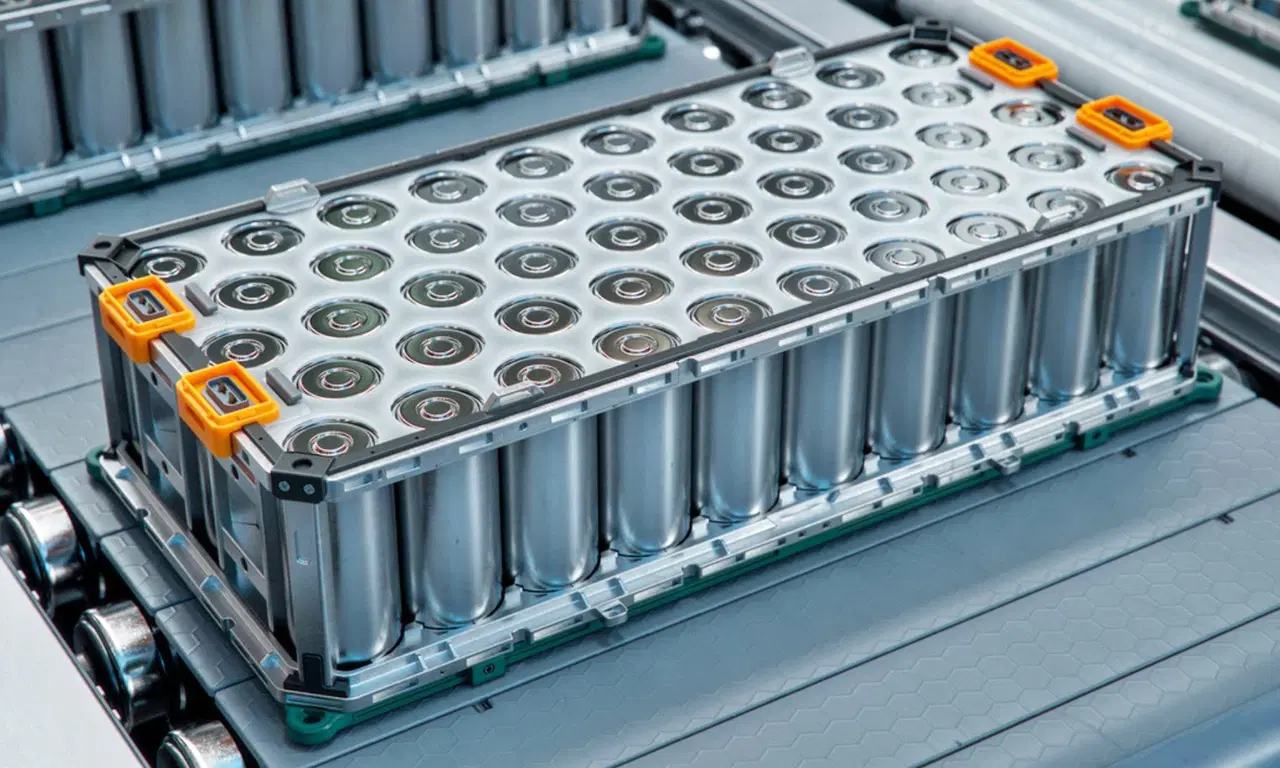
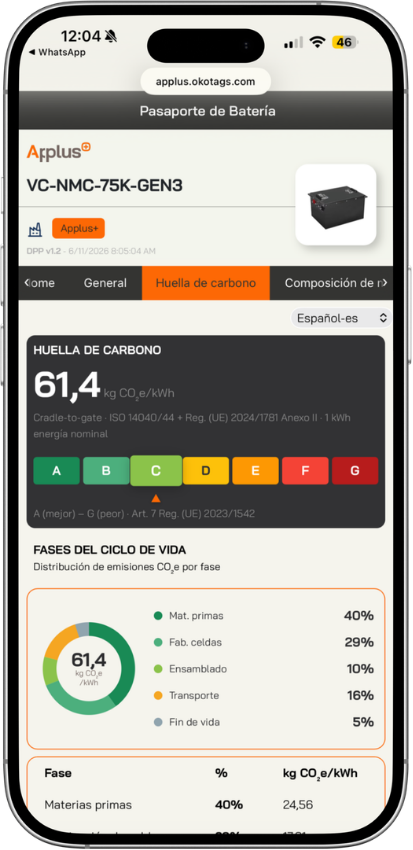
Composition, carbon footprint, state of health and second life.
A battery can bring together information on materials, capacity, state of health, carbon footprint, repair, reuse or supply chain traceability.
Look at a battery case
Traceability, documentation and connected packaging on site.
A bag of cement, or any bagged material, can link batch, performance, datasheets, certificates, instructions and logistics traceability, making that information useful for distribution, installers, the site and the end customer.
Explore a construction case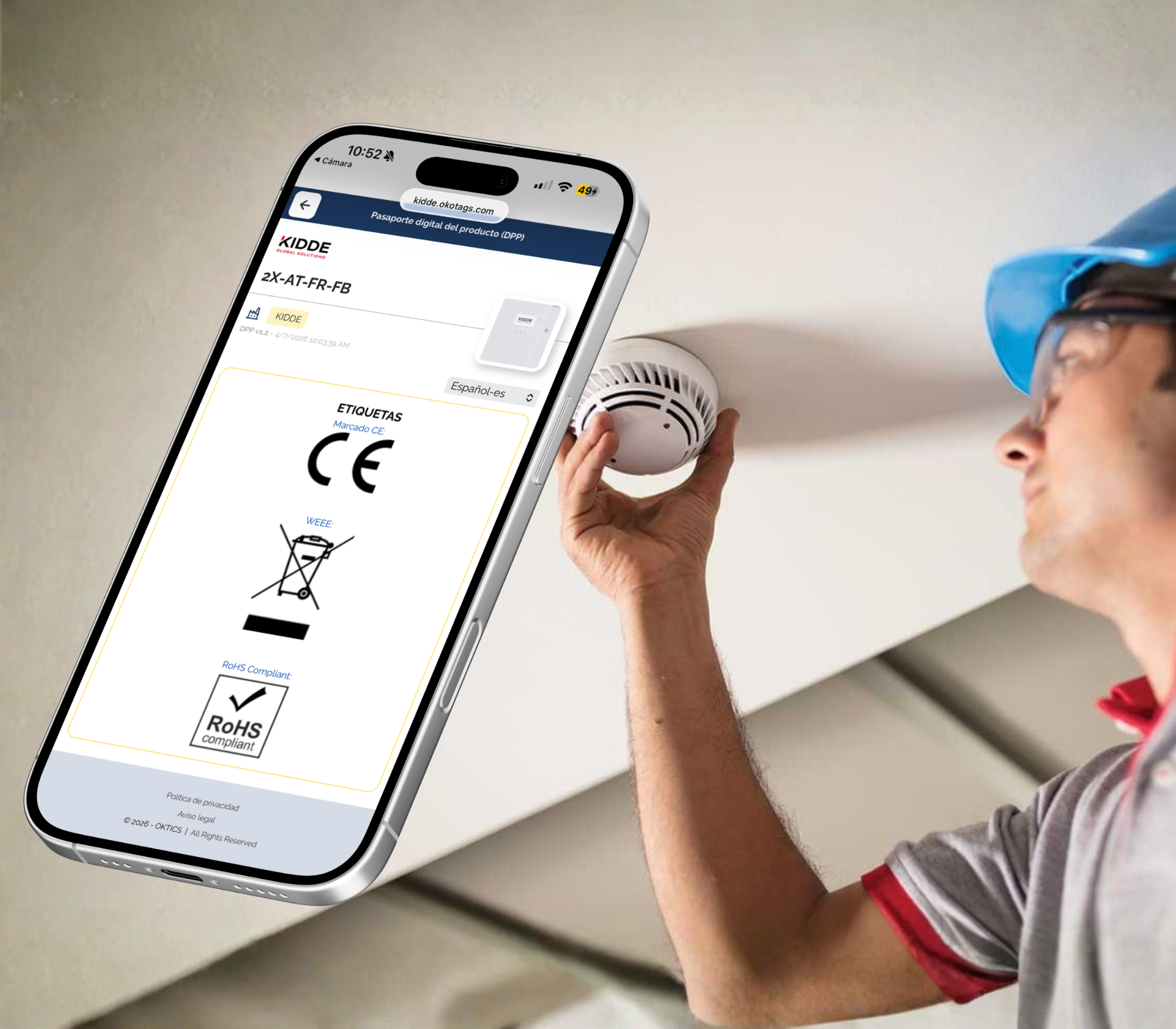
Technical documentation linked to the physical product.
Materials, components and industrial products can deliver datasheets, certificates, instructions, maintenance and usage data from the product itself.
See the industrial fitDPP CONSULTANCY AND PILOTS
Turn your first DPP into a project you can actually start.
We help you move from a regulatory obligation to a concrete scope: product, data, identifiers, documentation, pilot and the next steps towards rollout.