EU Battery Regulation: the key dates are already here
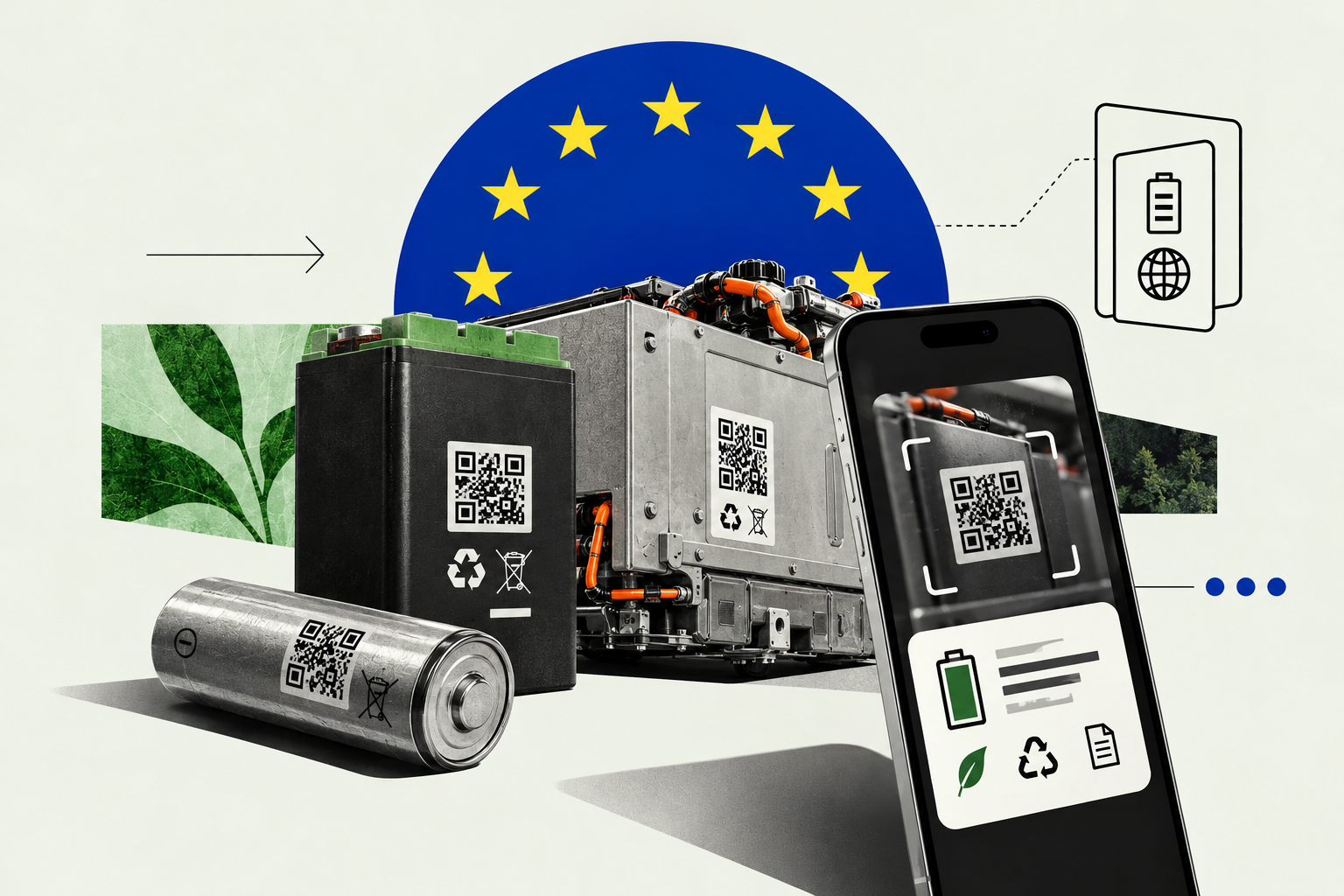
Regulation (EU) 2023/1542 changes how every battery sold in Europe is designed, labelled, documented and recycled. February 2027 brings two of its most visible milestones: a QR code on all batteries and a digital passport for the largest ones.
What it regulates
The Battery Regulation replaces the old directive and covers the entire battery life cycle: sustainability, safety, labelling, information, supply chain and end of life. As a regulation, it applies in the same way in every Member State, with no need for transposition.
It affects manufacturers, importers and distributors of five major battery families:
The timeline that matters
Some obligations have fixed dates and others depend on delegated acts the European Commission has yet to publish. These are the confirmed key dates:
Separate collection symbol on all batteries.
QR code mandatory on all batteries and a digital passport for EV, LMT and industrial batteries over 2 kWh. The rules on removability and replaceability of portable batteries also change.
Supply chain due diligence obligations, after being postponed in 2025.
Minimum recycled content of cobalt, lithium, nickel and lead in industrial, EV and SLI batteries.
The carbon footprint declaration and performance classes are still waiting for the official methodology: they will apply once the Commission adopts the relevant acts. The passport, by contrast, has no postponement clause.
From 18 February 2027, an EV, LMT or industrial battery over 2 kWh without a digital passport cannot be placed on the EU market.
From data to connected battery
Complying with the regulation is, above all, a data challenge: composition, origin of materials, recycled content, state of health, dismantling instructions… Information that comes from suppliers, from the ERP and from the battery management system itself, and that has to end up accessible with a scan and registered in the EU DPP Registry.
For the details of the passport, read Digital Battery Passport: what it is and how to comply before 2027.
Applus+ Laboratories and OKTICS, together
To support manufacturers through the whole process, OKTICS works with Applus+ Laboratories. Applus+ brings technical, testing and certification expertise; OKTICS, the technology to generate, publish and maintain the passport with OKO Identity for batteries.
Are your batteries ready for 2027?
We review with you what data you have, what's missing and how to get there in time.
See the solutionSources
This article is for information purposes only and does not constitute legal advice. Information updated October 2026.