The Battery Passport: what it is, who must comply, and how to get ready
On 18 February 2027, EV, LMT and industrial batteries above 2 kWh will no longer be marketable in the EU without a digital passport. Four months to go.
First mandatory deadline for the Digital Product Passport in the EU.
No passport, no access to the European market.

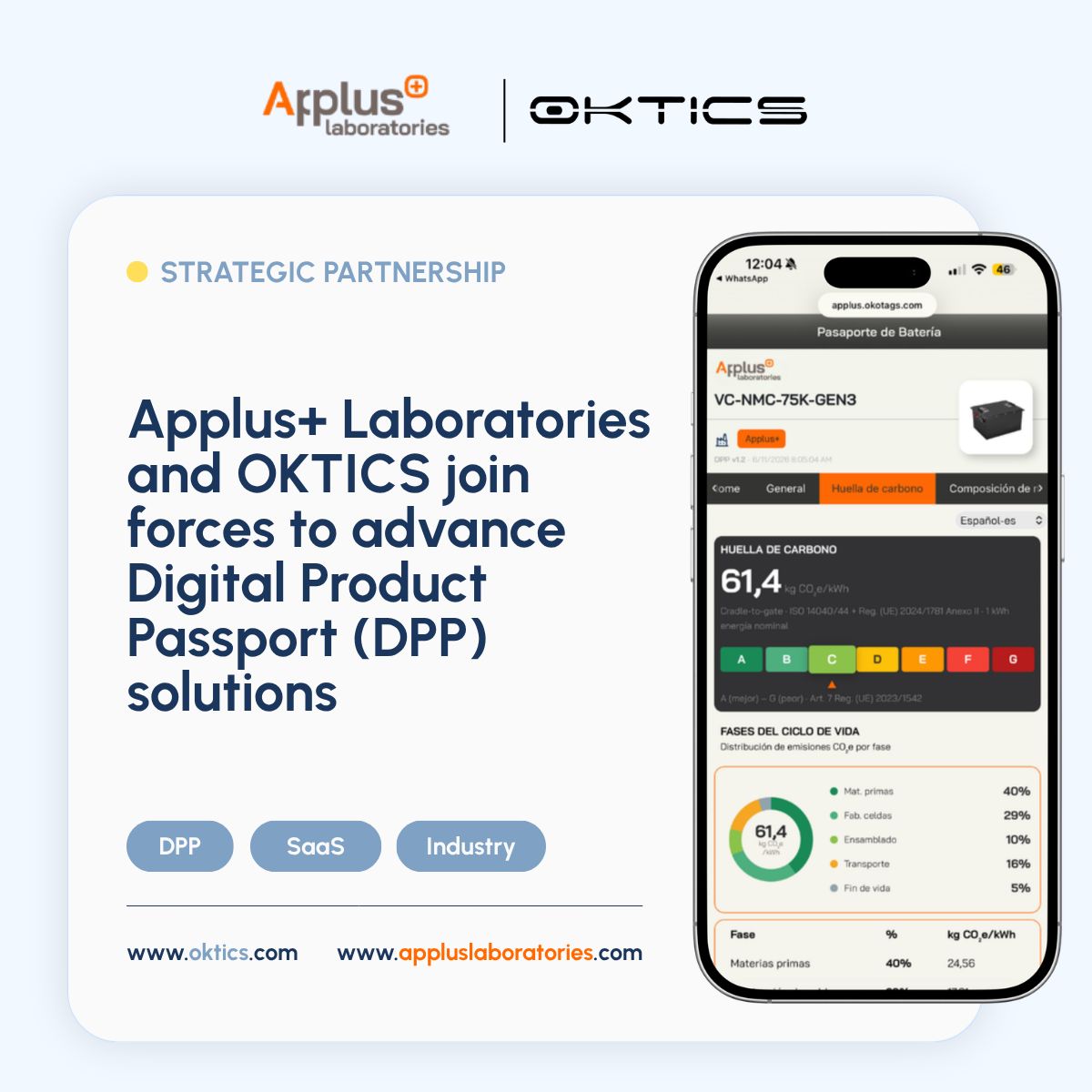
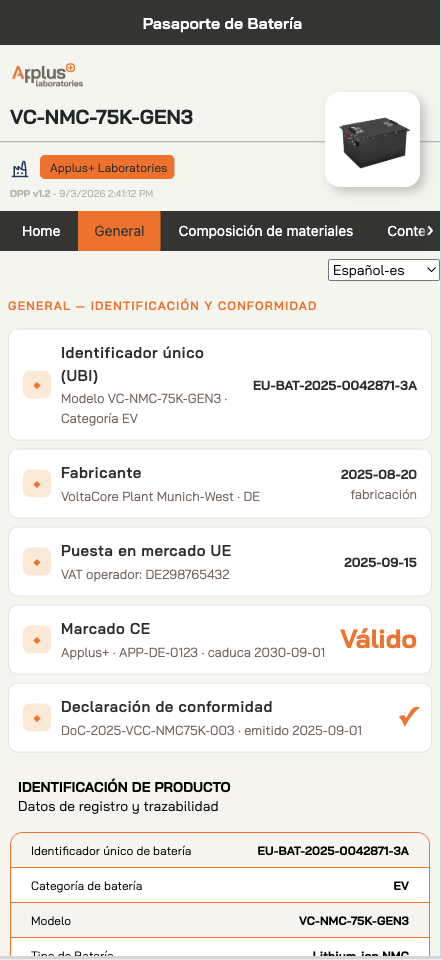
Battery Digital Passport view on the OKTICS OKOCloud platform.
What is the Battery Passport?
The Battery Passport is a structured digital record that follows each battery throughout its entire lifecycle. It is governed by the Battery Regulation (EU) 2023/1542, which requires every unit to carry a unique identifier — accessible via QR or NFC — linking to all relevant information: chemistry, material origin, carbon footprint, state of health, reuse potential, and end-of-life data.
Unlike a conventional data sheet, the Battery Passport is dynamic. It is updated throughout the battery's life: manufacturing data is loaded at the start, but real-time state of health comes from the BMS continuously. A recycler accessing the passport of a second-life battery sees not how it left the factory, but how it is right now.
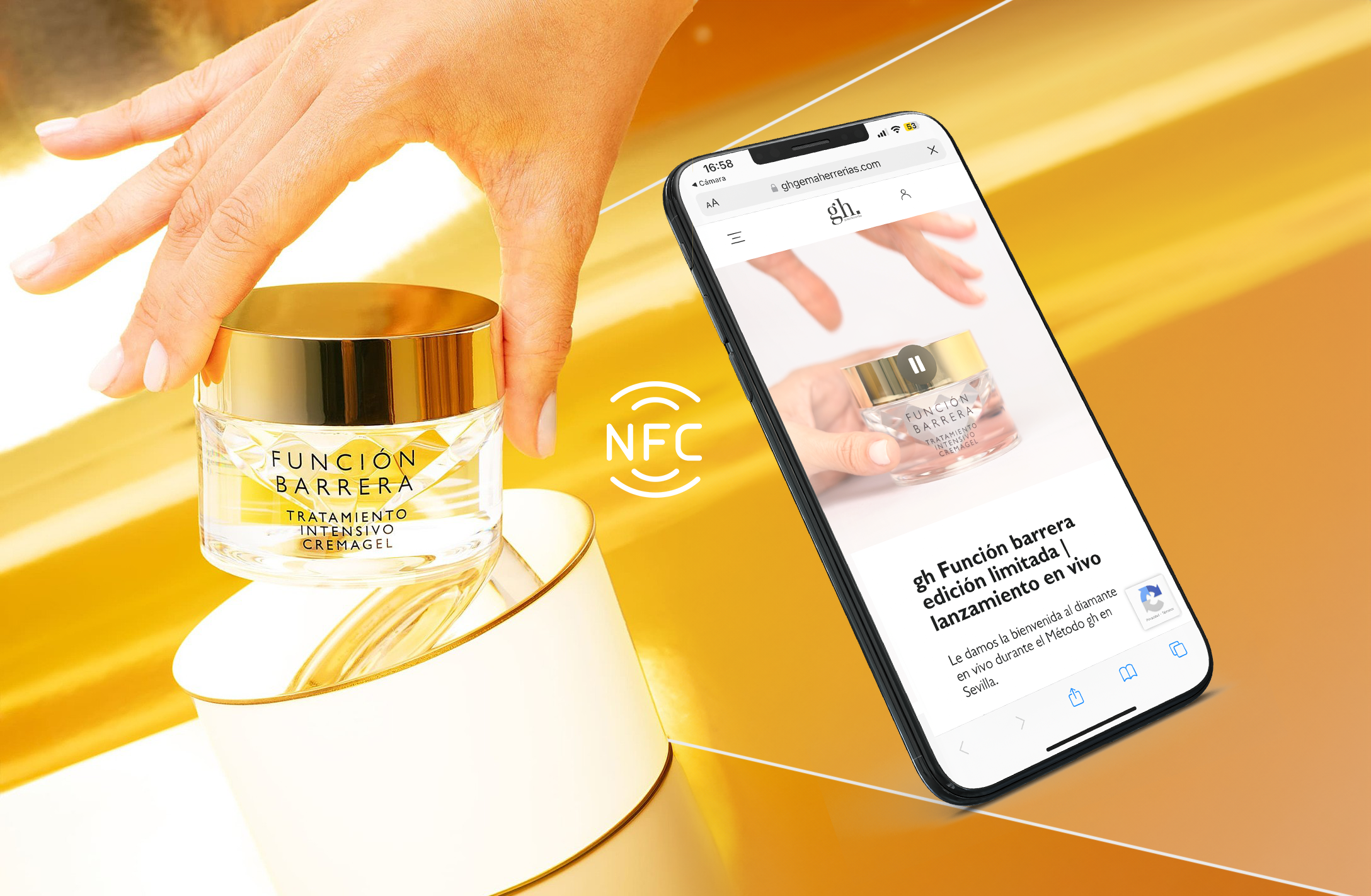
The passport is public and accessible: anyone with a smartphone can scan the QR or tap the NFC tag and access the information in seconds — no app, no registration required. What each profile sees — consumer, technician, regulator, or recycler — depends on the access permissions configured in the platform.
Who is affected and from when?
18 February 2027 is the first mandatory date for the DPP system across the EU. It applies to:
- Electric vehicle (EV) batteries — cars, vans and electric industrial vehicles
- LMT batteries — light means of transport: e-bikes, e-scooters, mopeds
- Industrial batteries above 2 kWh — stationary storage, machinery, backup systems
Any company that manufactures, imports or places these battery types on the European market is required to comply. Imported products are included: if it is sold in the EU, it must carry a passport.
General consumer batteries (laptops, electronic devices, household cells) are not covered by this first obligation. Their timeline will be defined in later phases of the Regulation.
What data must it contain?
The Battery Passport distinguishes between two types of data that coexist within the same passport:
Why you need to start now
There are four months left until 18 February 2027. In those four months, companies need to gather supplier data, structure composition and carbon footprint information, connect the BMS for state-of-health data, register with the EU DPP Registry, and publish the passport accessible via a QR or NFC tag on each battery.
This is not a process that can be resolved in two weeks. Companies that have not yet started are already at a disadvantage — not just against the regulator, but against competitors who will enter the market with a fully operational passport from day one.
How OKTICS solves it with OKO Identity
OKO Identity, built on the OKOCloud platform, manages the full Battery Passport lifecycle: it aggregates product and supplier data, validates it, generates the passport, and connects it directly to the EU DPP Registry. Deployment is measured in weeks, not months, and requires no internal development.
The architecture works in three layers: Logistics records traceability of cells, modules and packs; Identity consolidates the data and manages access permissions by profile (public, technicians, authorities, recyclers); and the OKOTag with GS1 Digital Link identifier is the physical link on the product.

Digital Passport editor in OKO Identity: data structure, access permissions and connection to the EU DPP Registry.
 +
+

Applus+ brings the technical and regulatory expertise; OKTICS brings the technology. Together we support manufacturers from structuring requirements through to deploying and maintaining the passport — with automatic updates as the regulation evolves towards 2030.
Does your company manufacture or import batteries?
Book a free diagnostic session and we'll tell you exactly where you stand and what needs to be done before 18 February.
See the battery solution