Digital Product Passport timeline: what is already real and what is not yet
For months, the Digital Product Passport (DPP) has been talked about as something that was coming. In 2026, concrete things have happened, and it is worth separating them from what is still pending, because many companies are making decisions based on dates that are no longer correct.
DPP timeline in the EU
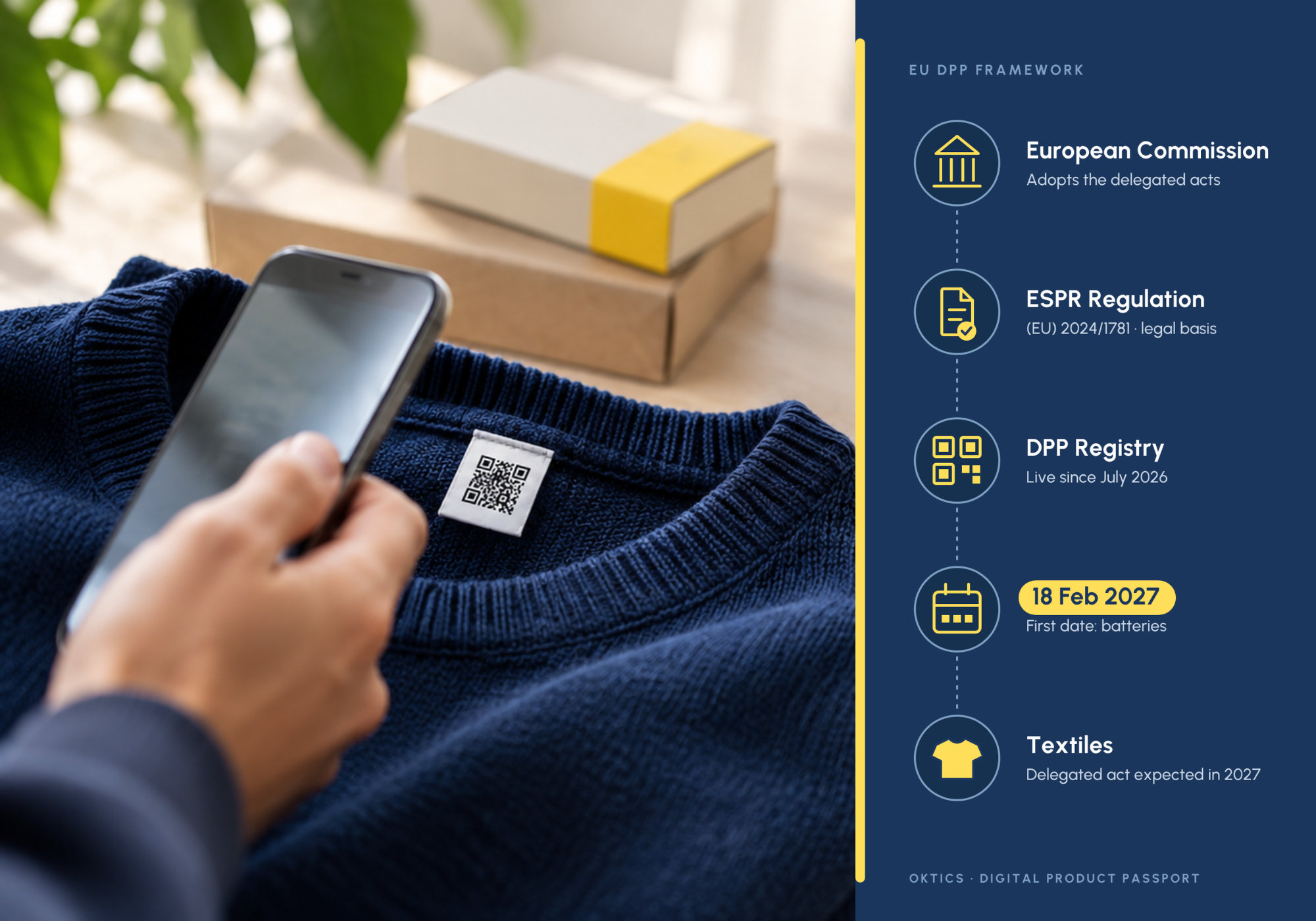
- May 2026 Six European DPP standards (CEN/CENELEC) are published
- 20 July 2026 The EU DPP Registry and its test environment go live
- 18 February 2027 First deadline: passport mandatory for electric vehicle, light means of transport and industrial batteries above 2 kWh
- Second half of 2027 · expected Adoption of the textile delegated act
- 2029 · expected DPP applies to textiles
● Confirmed ○ European Commission forecast, no final legal date
What is already real
The EU DPP Registry is live. On 20 July 2026 the European Commission launched it together with a test environment, following Implementing Regulation (EU) 2026/1778. Product data remains in the hands of each economic operator. The Registry stores each passport's unique identifier, its location and its metadata, and each operator must register the passport before placing the product on the market.
Technical standards exist. In May, CEN/CENELEC published six standards for the DPP, covering unique identifiers, data carriers and data exchange with the Registry. In July they were referenced in the Official Journal.
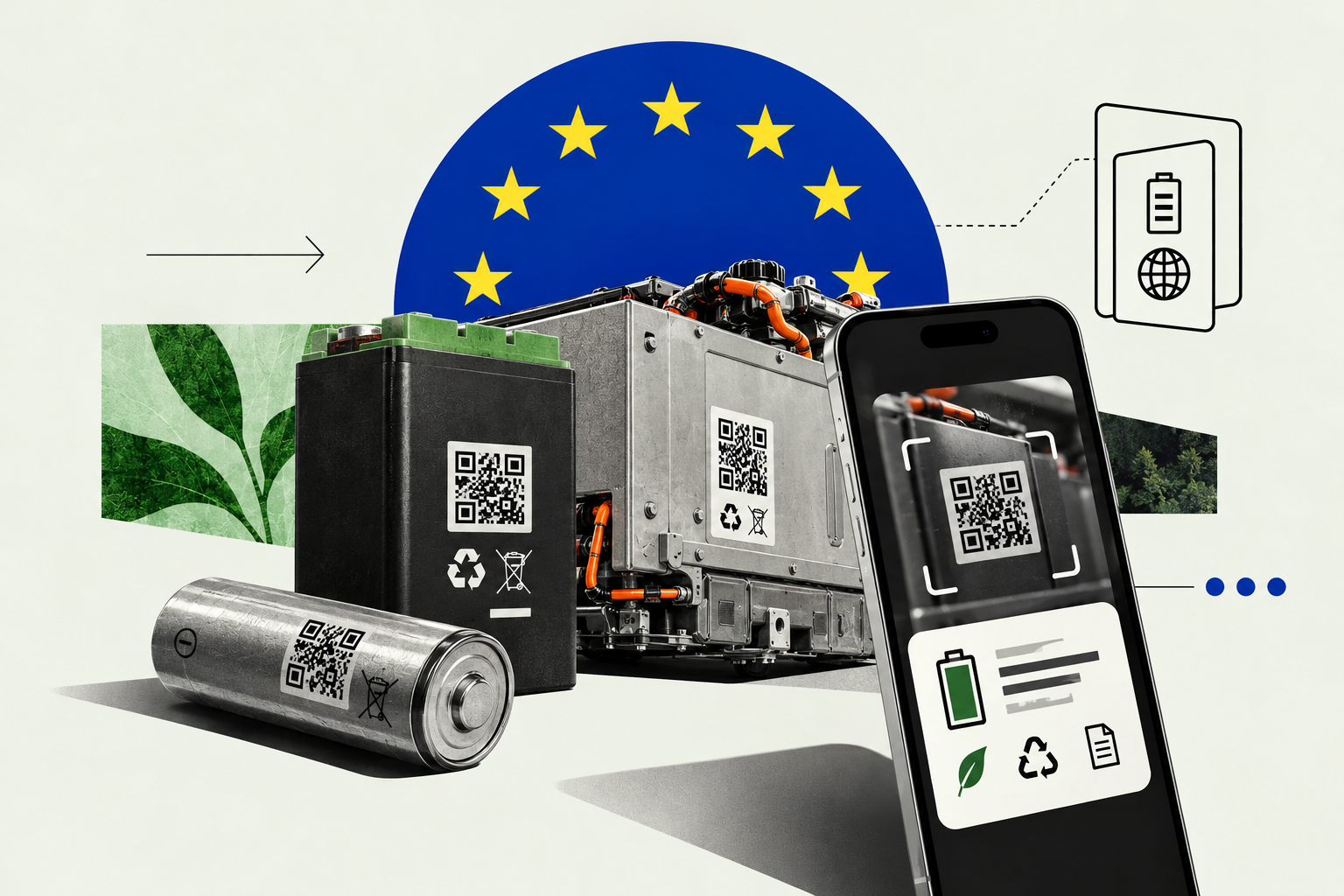
There is already a first date. On 18 February 2027 the passport becomes mandatory for electric vehicle batteries, light means of transport batteries (e-bikes and e-scooters) and industrial batteries above 2 kWh, under Regulation (EU) 2023/1542. We cover it in detail in our article on the key dates of the Batteries Regulation.
In fashion, there is already a binding obligation, although it is not the DPP. Since 19 July 2026, large companies can no longer destroy unsold clothing, accessories and footwear.
What is not yet settled
Textiles. The delegated act that will set the DPP requirements for textiles has not been adopted. The timeline presented by the Commission in May places its adoption in the second half of 2027 and the DPP application in 2029. The JRC preparatory study proposes batch-level identification as the minimum, with item-level as a voluntary option. Until the delegated act exists, no date is final.
The remaining categories. Each one will have its own delegated act. Batteries, construction and toys also have specific legislation that requires a DPP.
Decisions you can make now
Not having a date for your sector does not mean you cannot move forward. Three decisions do not depend on the calendar:
- Level of identification. Batch or item. It will depend on each category, but it is worth knowing what you can sustain in your production.
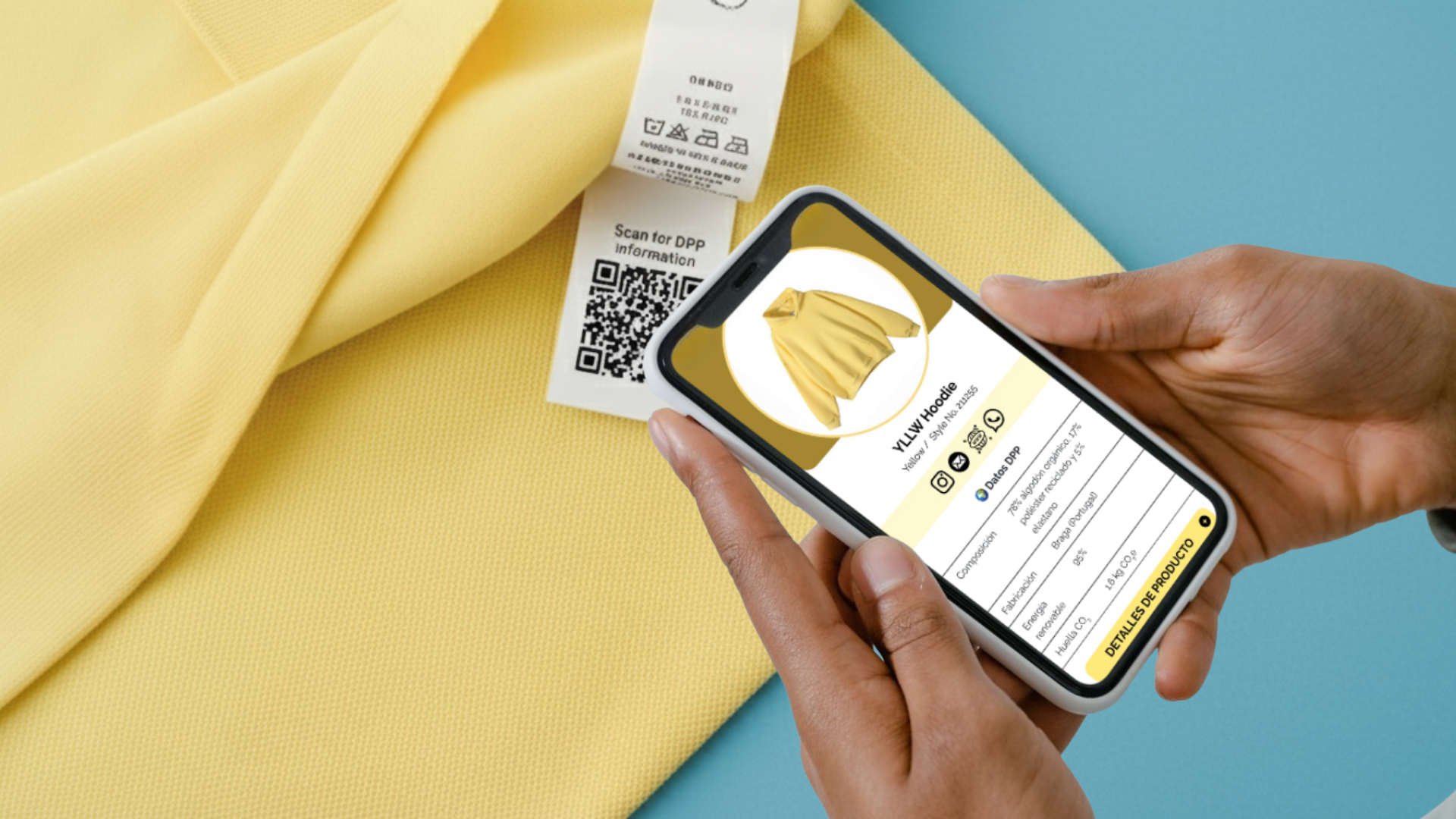
- Physical data carrier. The European standard on data carriers (EN 18220) sets requirements for symbology, print quality and durability. No single carrier is best for everything. A common approach is to combine a QR code as universal access with NFC when authentication or customer experience also matter.
- Where the data lives and who maintains it. The Registry does not store the content of the passport, so someone has to serve it, update it and keep it for years.
How to start without waiting for the delegated act
The most sensible approach is to choose one product line and run a limited pilot. First of all, take stock of which data you already have in a structured form (composition, origin, certificates) and which you are missing. The Commission's test environment lets you try out registration without affecting real data.
At OKTICS we work with companies that want to reach that moment with the infrastructure already tested, instead of improvising it when the obligation arrives.
Discover our Digital Product Passport What is the DPP